


 Accueil /
 What Is a Trickle Charger? A Complete 2026 Guide


Table des matières
- What Is a Trickle Charger?
- How Does a Trickle Charger Work?
- Why Batteries Lose Charge During Storage
- What Is the Difference Between a Trickle Charger and a Battery Charger?
- Trickle Charger vs Battery Maintainer
- Which Batteries Use Trickle Chargers?
- Trickle Charging Lead-Acid Batteries
- Can You Use a Trickle Charger on Lithium Batteries?
- Benefits of Using a Trickle Charger
- 1. Prevents Deep Discharge
- 2. Extends Battery Lifespan
- 3. Improves Reliability
- 4. Reduces Sulfation
- 5. Supports Seasonal Equipment
- When Should You Use a Trickle Charger?
- How Long Can You Leave a Trickle Charger Connected?
- Signs of Battery Overcharging
- Can Trickle Charging Damage a Battery?
- Smart Charging Technology in 2026
- Why Lithium Batteries Are Changing Charging Habits
- Portable Energy Systems and Battery Maintenance
- Choosing the Right Trickle Charger
- Why Battery Maintenance Matters More in 2026
- The Future of Battery Charging
- The Role of Gloflux in Modern Battery Solutions
- Dernières réflexions
- FAQ About Trickle Chargers
Battery charging technology has evolved rapidly in recent years, especially with the growth of portable electronics, backup power systems, marine batteries, RV energy storage, and lithium battery applications. Yet even in 2026, one charging method continues to play an important role in battery maintenance: trickle charging.
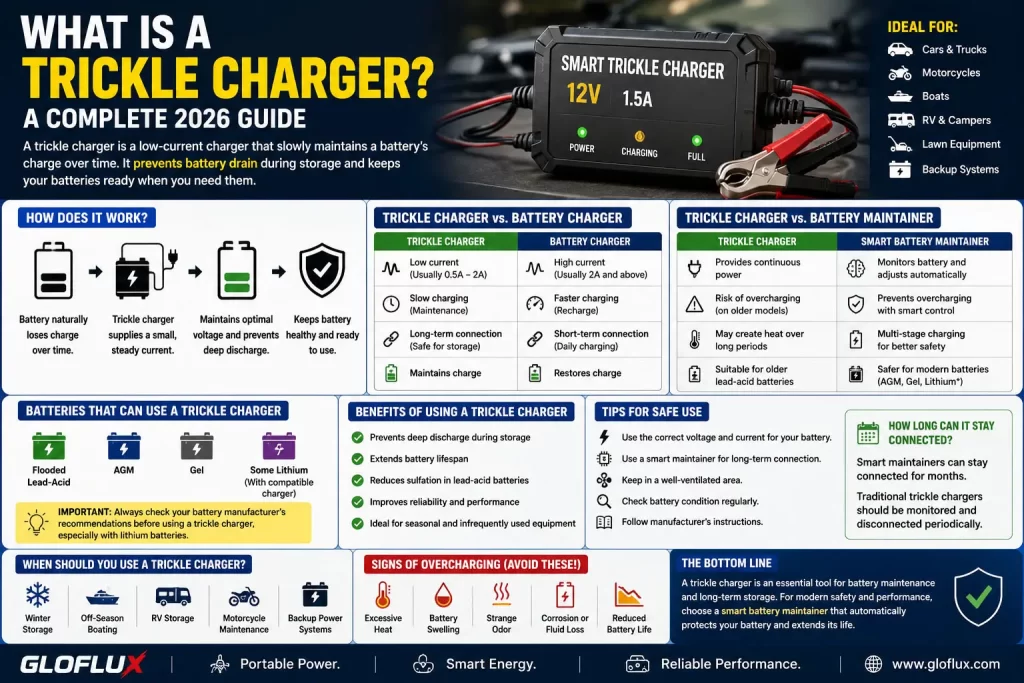
Many users hear the term “trickle charger” but are unsure what it actually does, when it should be used, or whether it is safe for modern lithium batteries. Choosing the wrong charger or charging method can shorten battery lifespan, reduce efficiency, or even damage battery systems.
À Gloflux, we focus on portable energy solutions and rechargeable battery technologies designed for modern power applications. This guide explains what a trickle charger is, how it works, when to use one, and how modern battery systems are changing battery maintenance practices in 2026.
What Is a Trickle Charger?
A trickle charger is a low-current battery charger designed to slowly recharge a battery over an extended period of time.
Unlike fast chargers that deliver high charging current quickly, trickle chargers provide a small, steady flow of electricity to compensate for natural battery self-discharge.
Trickle chargers are commonly used for:
- Automotive batteries
- Motorcycle batteries
- RV batteries
- Batteries marines
- Backup generators
- Seasonal vehicles
- Lawn equipment
- Stored battery systems
Their main purpose is battery maintenance rather than rapid charging.
How Does a Trickle Charger Work?
All rechargeable batteries naturally lose energy over time, even when not in use. This process is called self-discharge.
A trickle charger continuously supplies a small charging current to maintain battery voltage and prevent deep discharge during storage.
Typical trickle charging current is relatively low compared to standard chargers.
Par exemple :
- A fast charger may deliver 10A or more
- A trickle charger may provide only 1A–2A or less
Because charging occurs slowly, trickle charging generates less heat and places less stress on the battery.
Why Batteries Lose Charge During Storage
Even disconnected batteries gradually lose stored energy because of internal chemical reactions.
Factors that accelerate self-discharge include:
- Temperature fluctuations
- Âge de la batterie
- Internal resistance
- Chimie des batteries
- Long storage periods
If battery voltage drops too low during storage, permanent damage may occur.
This is especially problematic for:
- Seasonal vehicles
- Bateaux
- RVs
- Systèmes d’alimentation de secours
- Emergency equipment
Trickle chargers help maintain battery readiness during long periods of inactivity.
What Is the Difference Between a Trickle Charger and a Battery Charger?
Many users confuse trickle chargers with regular battery chargers, but they serve different purposes.
| Charger Type | Main Purpose | Charging Speed |
|---|---|---|
| Standard Charger | Recharge battery quickly | Plus vite |
| Trickle Charger | Maintain charge level | Plus lent |
Standard Chargers
Standard chargers:
- Deliver higher current
- Recharge batteries faster
- Are used after significant discharge
Trickle Chargers
Trickle chargers:
- Deliver low continuous current
- Maintain battery voltage
- Prevent storage-related discharge
Trickle chargers are ideal for battery maintenance rather than rapid charging.
Trickle Charger vs Battery Maintainer
In 2026, many modern chargers are technically battery maintainers rather than traditional trickle chargers.
Traditional Trickle Chargers
Older trickle chargers continuously provide power without automatically adjusting charging levels.
Les risques potentiels incluent :
- Surfacturation
- Excessive heat
- Battery damage over long periods
Smart Battery Maintainers
Modern battery maintainers monitor battery voltage and automatically adjust charging behavior.
These smart systems may:
- Pause charging when full
- Restart charging when voltage drops
- Reduce overheating risk
- Improve long-term battery health
Battery maintainers are generally safer for extended connection periods.
Which Batteries Use Trickle Chargers?
Trickle chargers are commonly used with:
- Flooded lead-acid batteries
- Batteries AGM
- Piles gel
- Some lithium battery systems
However, charging compatibility is extremely important.
Trickle Charging Lead-Acid Batteries
Lead-acid batteries commonly benefit from maintenance charging because they naturally self-discharge during storage.
Les applications incluent :
- Cars
- Camions
- Bateaux
- RVs
- Motorcycles
- Generators
Without maintenance charging, lead-acid batteries may develop:
- Sulfation
- Voltage drop
- Reduced capacity
- Starting problems
Trickle charging helps reduce these risks.
Can You Use a Trickle Charger on Lithium Batteries?
This depends on the battery and charger design.
Modern lithium batteries often include:
- Systèmes de gestion des batteries (BMS)
- Protection contre la surcharge
- Voltage monitoring
- Smart charging controls
Traditional trickle chargers designed for lead-acid batteries may not always work safely with lithium batteries.
Why Lithium Batteries Are Different
Lithium batteries:
- Hold charge longer
- Have lower self-discharge rates
- Require different charging profiles
- Are more sensitive to overvoltage
Using incompatible chargers may reduce lithium battery lifespan or trigger protection systems.
À Gloflux, portable lithium battery systems are designed around modern charging efficiency, smart protection, and stable energy management.
Benefits of Using a Trickle Charger
1. Prevents Deep Discharge
Long-term storage can drain batteries below safe voltage levels.
Trickle charging helps maintain safe operating voltage.
2. Extends Battery Lifespan
Maintaining proper charge levels helps reduce battery degradation during inactivity.
3. Improves Reliability
Stored vehicles and backup systems remain ready for use.
4. Reduces Sulfation
For lead-acid batteries, maintaining charge reduces sulfation buildup.
5. Supports Seasonal Equipment
Ideal for:
- Bateaux
- RVs
- Motorcycles
- Classic cars
- Backup generators
When Should You Use a Trickle Charger?
Trickle chargers work best when batteries remain unused for extended periods.
Common scenarios include:
- Winter vehicle storage
- Seasonal boating
- Systèmes d’alimentation de secours
- Emergency equipment
- Rarely driven vehicles
If a battery is used regularly, a trickle charger may not be necessary.
How Long Can You Leave a Trickle Charger Connected?
This depends on charger type.
Traditional Trickle Chargers
Older chargers may overcharge batteries if left connected too long.
Smart Maintainers
Modern smart chargers can often remain connected safely for extended periods because they automatically regulate charging cycles.
Always follow manufacturer recommendations.
Signs of Battery Overcharging
Improper charging can damage batteries.
Warning signs include:
- Excessive heat
- Swelling
- Fluid loss
- Strange odors
- Reduced battery life
Overcharging is especially harmful for lead-acid batteries.
Can Trickle Charging Damage a Battery?
Yes, if used incorrectly.
Les risques potentiels incluent :
- Surfacturation
- Accumulation de chaleur
- Water loss in flooded batteries
- Reduced battery lifespan
Modern smart maintainers reduce these risks significantly compared to older continuous-output chargers.
Smart Charging Technology in 2026
Battery charging technology continues improving rapidly.
Modern smart chargers may include:
- Automatic voltage monitoring
- Multi-stage charging
- Protection contre la température
- Battery chemistry detection
- Bluetooth monitoring
- Battery health diagnostics
These features improve charging efficiency and long-term battery maintenance.
Why Lithium Batteries Are Changing Charging Habits
Lithium batteries require less maintenance than traditional lead-acid systems because they:
- Self-discharge more slowly
- Maintain voltage better
- Recover faster after use
- Support smarter BMS protection
As a result, many modern lithium battery systems rely more on intelligent charging systems than traditional trickle charging methods.
Portable Energy Systems and Battery Maintenance
Battery maintenance is no longer limited to vehicles.
Modern portable power applications include:
- Centrales électriques portables
- Électronique intelligente
- Systèmes d’énergie de secours
- Marine energy storage
- RV battery systems
- Portable mobility devices
These systems increasingly use advanced lithium batteries with smart charging integration.
À Solutions de batteries Gloflux, battery charging efficiency and portable energy optimization remain important priorities across modern battery technologies.
Choosing the Right Trickle Charger
When selecting a trickle charger, consider:
- Chimie des batteries
- Compatibilité de tension
- Charging current
- Smart charging features
- Protection contre la température
- Automatic shutoff capability
For Lead-Acid Batteries
À la recherche :
- Multi-stage charging
- Float charging mode
- Protection contre la surcharge
For Lithium Batteries
Use chargers specifically designed for lithium chemistry and BMS compatibility.
Why Battery Maintenance Matters More in 2026
Modern users increasingly depend on portable and backup energy systems.
Battery reliability now affects:
- Transportation
- Loisirs de plein air
- Emergency preparedness
- Stockage d’énergie renouvelable
- Électronique intelligente
- Portable power systems
Proper maintenance helps maximize:
- Durée de vie de la batterie
- Safety
- Efficacité de charge
- Long-term performance
The Future of Battery Charging
Battery charging technology continues evolving toward:
- Smarter automation
- Charge plus rapide
- Improved safety
- Wireless charging integration
- Portable charging ecosystems
- AI-based battery management
As energy storage systems become more advanced, intelligent charging control will continue replacing older manual charging methods.
The Role of Gloflux in Modern Battery Solutions
À Gloflux, nous nous concentrons sur des technologies avancées de batteries conçues pour des applications modernes d’énergie portable.
Nos solutions de batteries prennent en charge :
- Électronique portable
- Systèmes de batteries remplaçables
- Stockage d’énergie portable
- Lithium battery integration
- Smart charging applications
As portable power demands continue growing in 2026, battery maintenance and charging efficiency remain critical parts of long-term energy performance.
Dernières réflexions
A trickle charger slowly maintains battery charge during storage and helps prevent deep discharge, voltage loss, and long-term battery degradation.
While traditional trickle chargers still exist, modern smart battery maintainers now provide safer and more intelligent battery management.
For many applications, especially lead-acid storage systems, trickle charging remains a useful maintenance solution. However, lithium batteries often require specialized charging systems designed around modern Battery Management Systems and smart charging logic.
Understanding battery chemistry and charging compatibility helps users improve battery lifespan, reliability, and long-term performance across portable and backup energy systems.
FAQ About Trickle Chargers
What is a trickle charger used for?
A trickle charger maintains battery charge during storage by supplying a small continuous charging current.
Can a trickle charger overcharge a battery?
Traditional trickle chargers can overcharge batteries if left connected too long. Smart maintainers reduce this risk.
Are trickle chargers safe for lithium batteries?
Only if the charger is specifically compatible with lithium battery chemistry and charging requirements.
How long does trickle charging take?
Trickle charging is intentionally slow and designed mainly for maintenance rather than rapid charging.
Is a battery maintainer better than a trickle charger?
Modern smart battery maintainers are generally safer and more efficient because they automatically regulate charging behavior.
Parlez au fabricant
Ressources et Perspectives
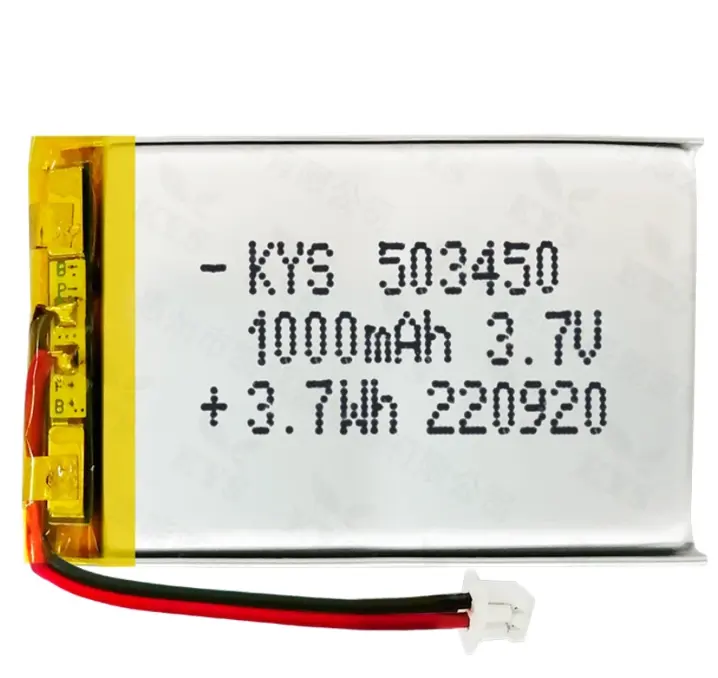
Meilleure batterie LiPo pour appareils IoT : comment choisir la bonne solution d’alimentation
2026-07-28
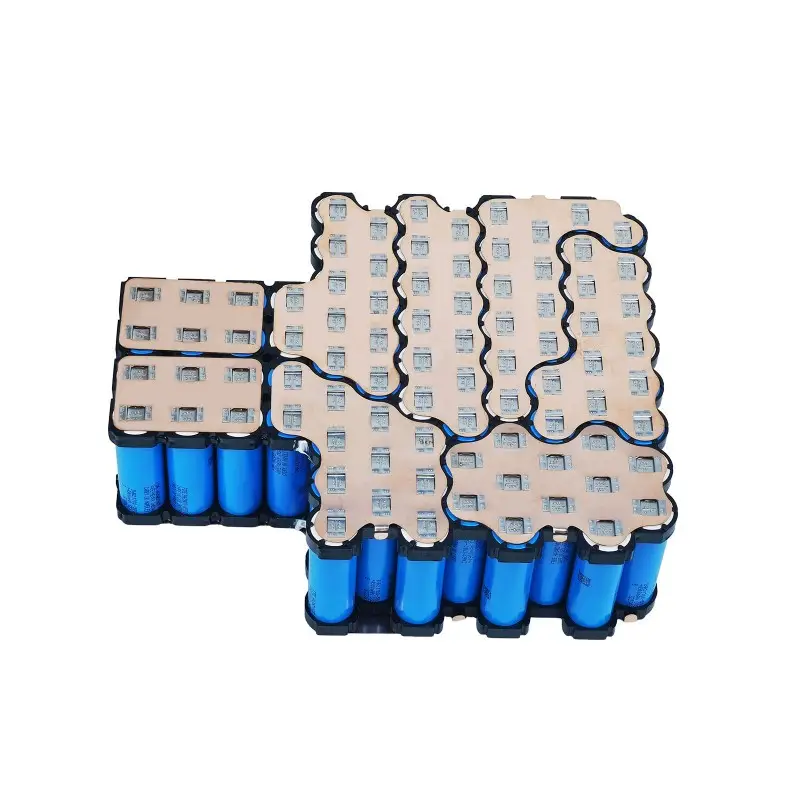
Pack batterie lithium-ion personnalisé 51,8V 30Ah 21700 pour systèmes d’alimentation robotiques humanoïdes commerciaux avec BMS intégré pour un fonctionnement sûr et fiable
2026-07-28
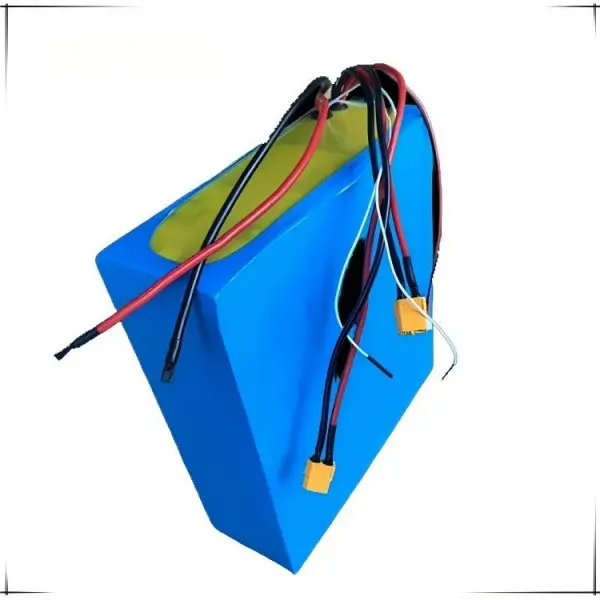
Module batterie LiFePO4 personnalisé 38,4V 30Ah pour robots avec port de recharge sans fil
2026-07-28
24V 36V 48V 52V 60V 72V 40Ah 50Ah LiFePO4 batterie rechargeable pour camping-cars, AGV, voiturettes de golf et systèmes de stockage d’énergie
2026-07-28


