


 Accueil /
 Packs de batteries LiFePO4 personnalisés avec cellules 18650, 26650 ou 32700, 6,4V–12,8V, 6Ah–45Ah pour lampadaires LED et solaires


Table des matières
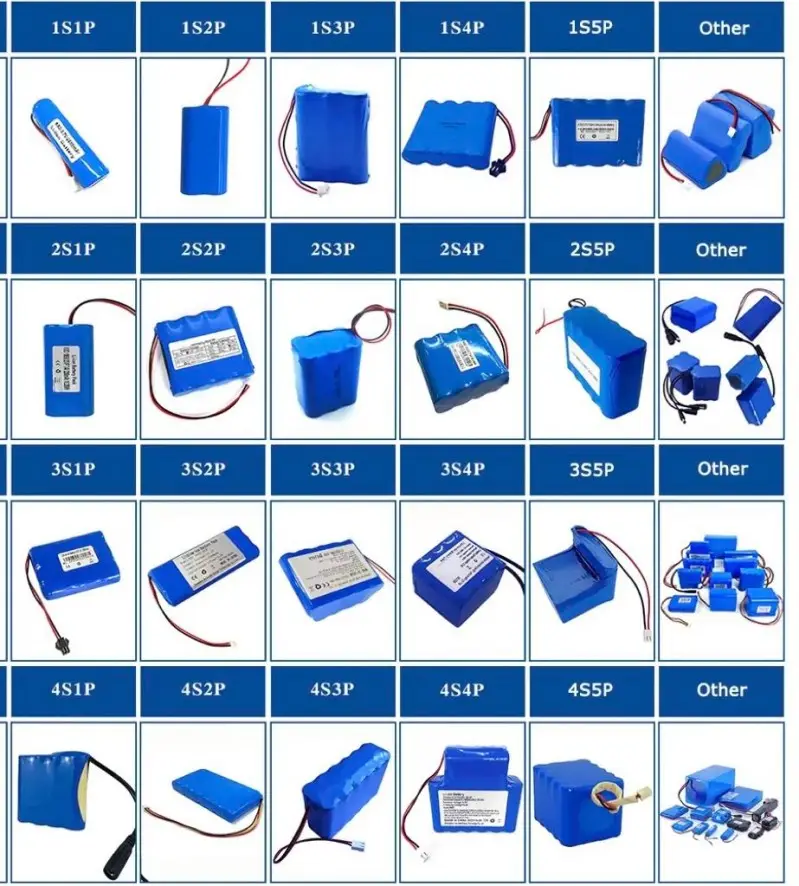
Reliable energy storage is one of the most important parts of an LED or solar street lighting system. Even when the solar panel, controller, and LED module are properly selected, poor battery performance can still cause short lighting time, unstable output, premature shutdown, or frequent maintenance.
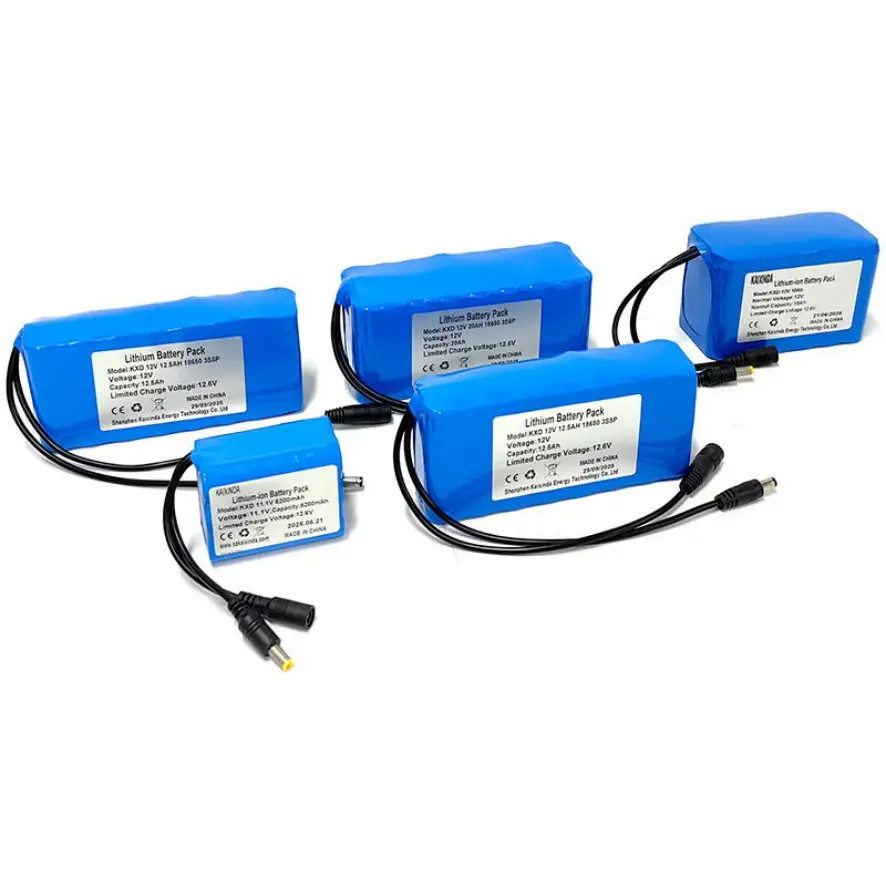
Custom LiFePO4 battery packs provide a practical solution for solar lighting projects that require long cycle life, stable discharge, compact installation, and flexible electrical configurations. Using 18650, 26650, or 32700 cylindrical cells, these battery packs can be designed in 6.4V or 12.8V configurations with capacities ranging from 6Ah to 45Ah.
This wide selection allows manufacturers, lighting contractors, distributors, and system integrators to match the battery pack with the actual power consumption, available installation space, charging conditions, and expected operating time of each lighting system.
Why LiFePO4 Batteries Are Suitable for Solar Lighting
Lithium iron phosphate, commonly known as LiFePO4, is widely used in outdoor lighting and solar energy storage applications because of its stable chemistry and dependable cycling performance.
Compared with many traditional battery technologies, LiFePO4 batteries offer a long service life, low self-discharge, stable voltage output, and good thermal stability. These characteristics are particularly important for solar street lights, which normally charge during the day and discharge throughout the night.
LiFePO4 battery packs can also be designed with an integrated battery management system. The BMS monitors the battery during charging and discharging and can provide protection against overcharge, over-discharge, overcurrent, short circuit, and abnormal temperature.
The actual protection settings should be selected according to the solar controller, LED load, charging current, and environmental conditions.
18650, 26650 and 32700 Cell Options
Different solar lighting projects have different requirements for capacity, battery dimensions, discharge performance, and installation method. Selecting the correct cell format helps balance these factors.
18650 LiFePO4 Battery Packs
The 18650 cell has a compact cylindrical structure and is suitable for battery compartments where space is limited. Multiple cells can be connected in series and parallel to achieve the required voltage and capacity.
Custom 18650 LiFePO4 battery packs are commonly used in smaller LED lamps, solar garden lights, pathway lights, wall-mounted lighting, and compact solar street light systems.
26650 LiFePO4 Battery Packs
The 26650 cell has a larger diameter and generally offers greater capacity per cell than the 18650 format. This can reduce the number of parallel cells required in certain battery pack designs.
It is suitable for medium-capacity solar lighting systems that need a balance between compact dimensions, stable discharge, and practical assembly.
32700 LiFePO4 Battery Packs
The 32700 cell is often selected for higher-capacity battery packs. Its larger cell format can simplify pack construction and is well suited to solar street lights, outdoor security lighting, and independent solar energy storage systems.
However, cell selection should not be based only on capacity. The installation space, heat dissipation, pack weight, maintenance method, and enclosure design should also be considered.
Available Voltage and Capacity Configurations
Custom solar lighting battery packs can be produced in 6.4V and 12.8V configurations.
A 6.4V LiFePO4 battery pack is normally created using two cells or cell groups connected in series. It may be used in lower-voltage LED systems, garden lights, warning lamps, and compact solar lighting products.
A 12.8V battery pack normally uses four LiFePO4 cell groups connected in series. This configuration is commonly used in larger solar street lights, LED lighting systems, monitoring equipment, and other off-grid applications.
Capacity options from 6Ah to 45Ah allow the pack to be matched with different lighting durations and power requirements. A small LED lamp may only require a compact 6Ah battery, while a high-power street light designed to operate throughout the night may require 20Ah, 30Ah, or 45Ah.
The correct capacity should be calculated according to LED power, operating hours, system voltage, controller efficiency, local sunlight conditions, required backup days, and acceptable depth of discharge.
Stable Discharge for Reliable Nighttime Lighting
Solar street light batteries usually discharge over several hours rather than delivering extremely high current for a short period. For this reason, stable continuous discharge is generally more important than very high discharge capability.
The discharge rate can be customized according to the LED driver and system design. Depending on the selected cells and BMS, the battery pack may be designed for applications requiring 0.5C, 1C, or another specified continuous discharge rate.
The battery manufacturer should confirm the normal operating current, peak current, and maximum allowable current before finalizing the pack design. Correct current matching helps prevent unnecessary voltage drop, overheating, and BMS protection activation.
Options de conception personnalisées
A solar lighting battery pack often needs to fit into a lamp housing, underground battery box, pole-mounted enclosure, or integrated solar light structure. Standard battery dimensions may not always meet these requirements.
Custom LiFePO4 battery packs can be designed with different:
- Cell arrangements and pack dimensions
- Plastic, metal, PVC, or heat-shrink enclosures
- Cable lengths and wire specifications
- Connectors and output terminals
- Ports de charge et de décharge
- BMS protection parameters
- Capteurs de température
- Waterproofing and insulation structures
- Communication functions when required
The battery should also be matched with the solar charge controller. Charging voltage, maximum charging current, low-voltage cut-off, and recovery voltage must be compatible with the LiFePO4 pack.
Domaines d’application typiques
These custom battery packs can be used in a wide range of outdoor lighting and off-grid systems, including solar street lights, LED road lamps, solar garden lights, landscape lighting, pathway lights, security lights, traffic warning lights, billboard lighting, parking area lights, and remote monitoring equipment.
They are also suitable for OEM and ODM projects where the battery must be integrated into a specific housing or electrical system.
Choosing the Right Battery Pack
Before ordering a custom LiFePO4 battery pack, buyers should provide detailed technical information. Important details include nominal voltage, required capacity, LED power, operating time, charging current, discharge current, installation dimensions, connector type, cable length, waterproof requirements, and expected working temperature.
Providing complete information allows the battery manufacturer to recommend a suitable cell type, series-parallel configuration, BMS, enclosure, and protection solution.
Conclusion
Custom LiFePO4 battery packs using 18650, 26650, or 32700 cells provide flexible energy storage solutions for LED and solar street lighting systems. With 6.4V and 12.8V options and capacities from 6Ah to 45Ah, the battery can be adapted to different lighting powers, operating times, installation spaces, and environmental conditions.
A properly designed battery pack improves nighttime lighting stability, charging efficiency, safety protection, and long-term system reliability. For solar lighting manufacturers and project developers, matching the battery with the complete system is the key to achieving consistent outdoor performance.
Parlez au fabricant
Ressources et Perspectives
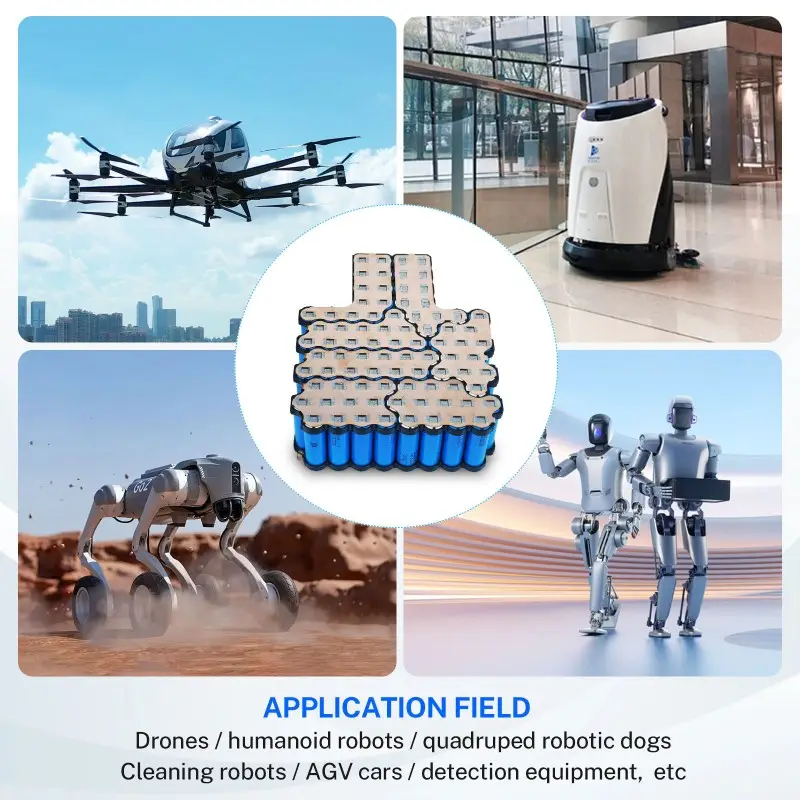
Fabricant de conception de pack batterie personnalisé : du concept de batterie à une production fiable
2026-07-30
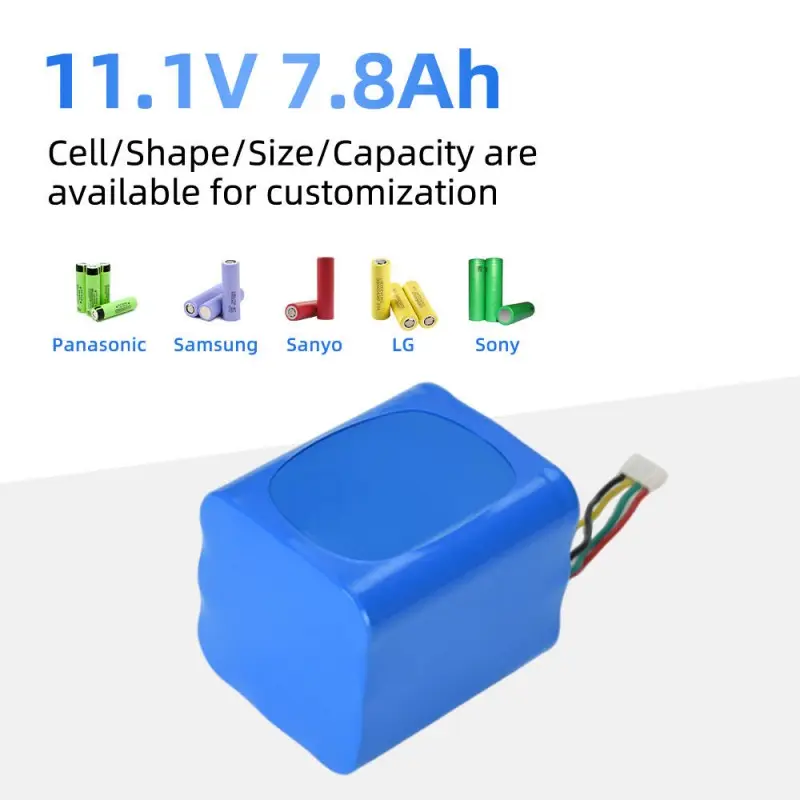
Batterie lithium-ion rechargeable 12V 7800mAh 3S3P 18650 pour feux de circulation
2026-07-30
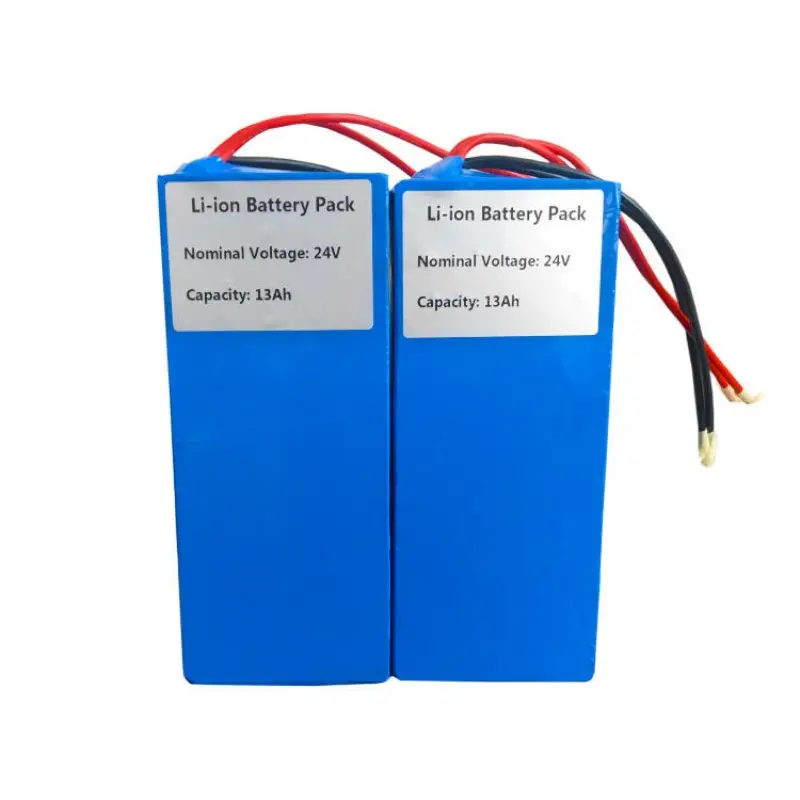
Pack batterie lithium-ion 24V 10Ah–13Ah 7S5P 18650 pour éclairage public solaire
2026-07-30
Packs de batteries LiFePO4 personnalisés avec cellules 18650, 26650 ou 32700, 6,4V–12,8V, 6Ah–45Ah pour lampadaires LED et solaires
2026-07-30


