

 Accueil /
 Batterie à condensateur lithium 3,7V 16300
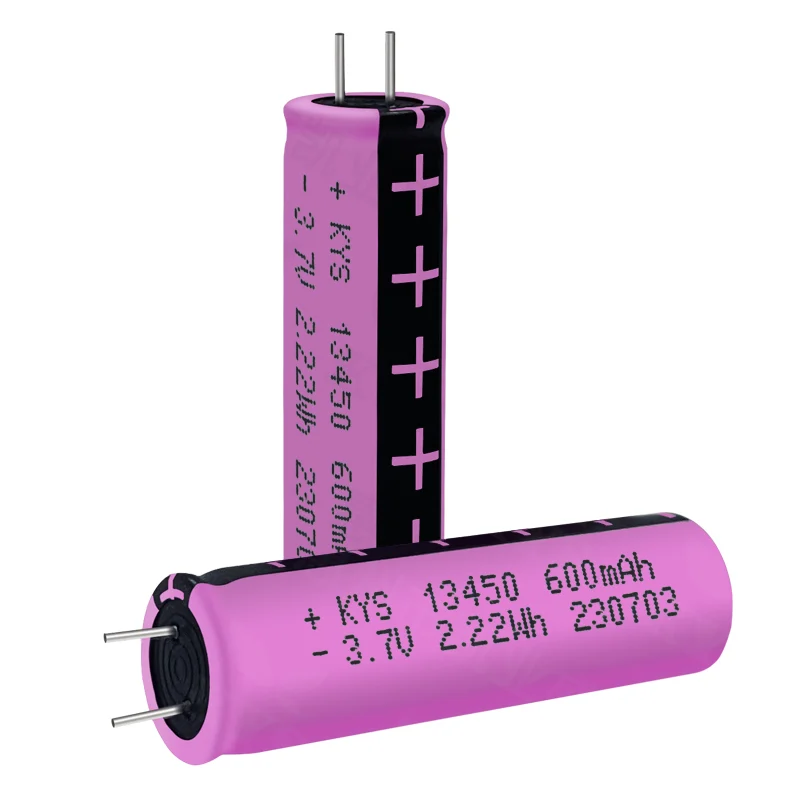
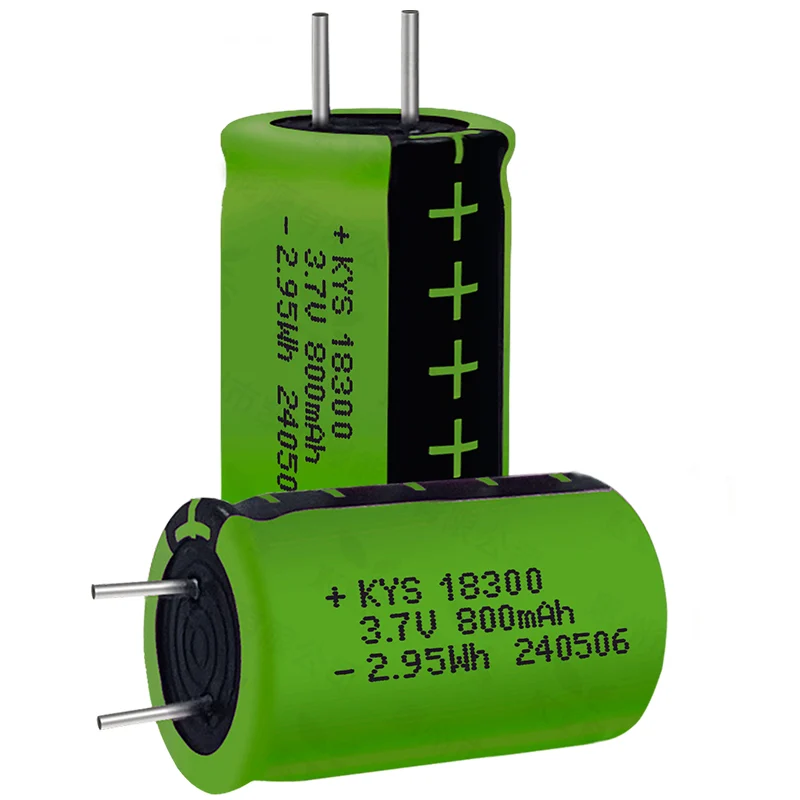
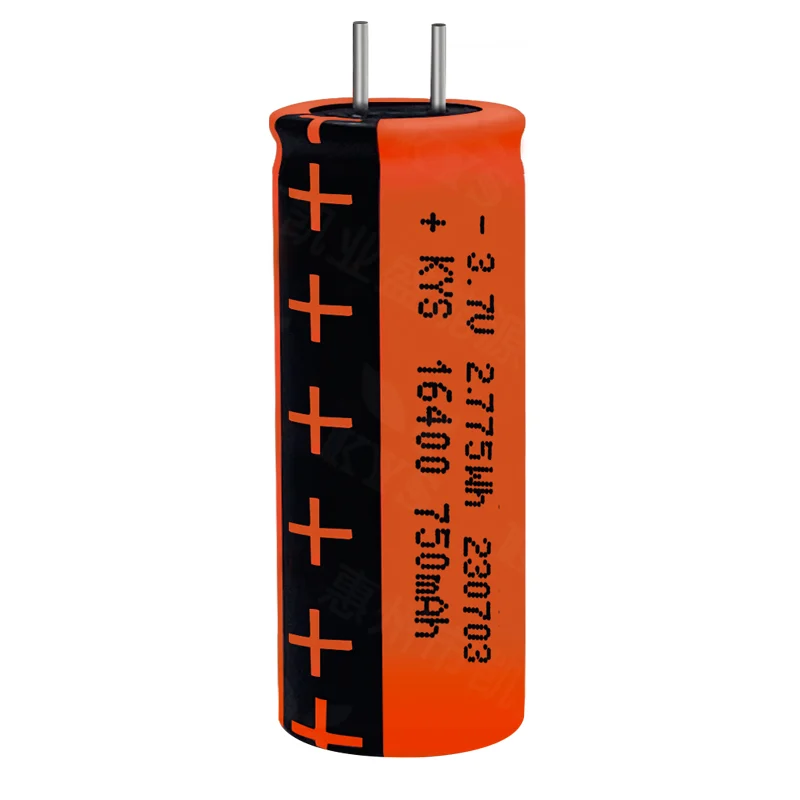
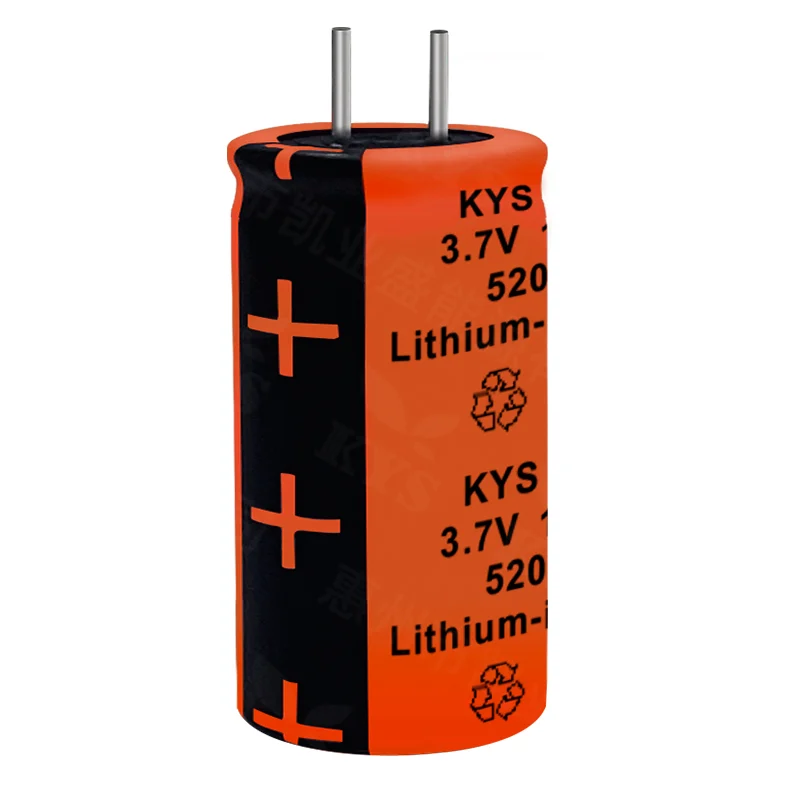
Get steady, long-lasting power with the KYS 16300 3.7V lithium capacitor battery. Designed for portable electronics that demand reliability. Low self-discharge keeps devices ready when needed. OEM customization available. A solid fit for e-cigarettes, POS machines, beauty devices, and more.
- Model: 16300 Lithium-Ion Capacitor
- Cell Size: 16.3(Diameter)×30.7 mm
- Tension nominale : 3,7 V
- Courant de décharge : 3 A
- Capacité : 520~550 mAh
- Résistance interne : 45 mΩ
- Portée de l’application : Produits électroniques
- Tension de charge : 4,2 V
 Obtenez un devis gratuit
Retour à la liste des produits
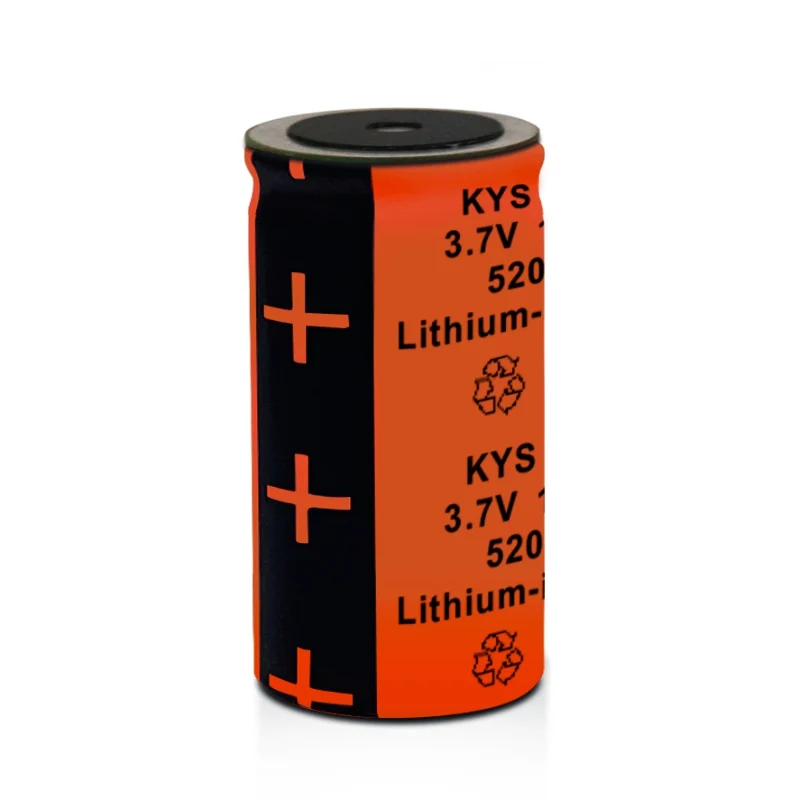
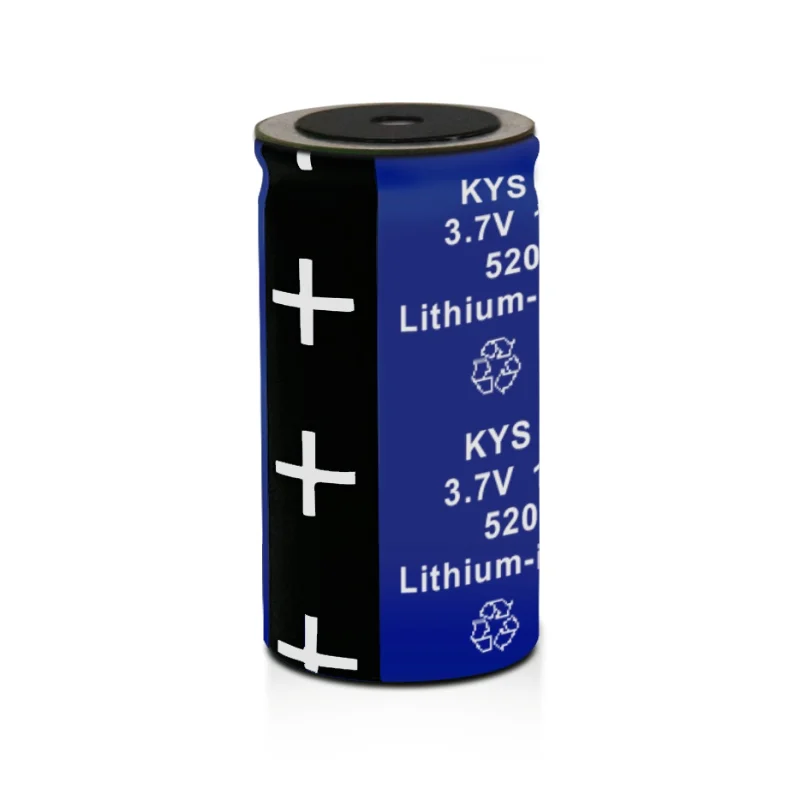
Aperçu
Lithium Capacitor Battery Structural Overview
Engineers design the lithium capacitor battery (16300, 3.7V class) using a hybrid electrochemical architecture that integrates lithium-ion electrode chemistry with capacitor-type charge behavior. First, they arrange cathode foil, anode foil, and a microporous separator into a layered strip, and they wind the structure into a compact cylindrical core under controlled tension. Meanwhile, they maintain precise alignment throughout the winding stage to ensure uniform layer distribution. After that, technicians insert the rolled assembly into a rigid metal casing and stabilize its internal geometry before electrolyte injection begins.
Composition des matériaux et système électrochimique
Manufacturers coat lithium metal oxide compounds onto aluminum foil to form the cathode layer, while they apply graphite-based slurry onto copper foil to construct the anode layer. In addition, they introduce a PP/PE multilayer separator that supports ion transport while preventing direct electrode contact. Furthermore, they prepare a lithium salt electrolyte dissolved in organic carbonate solvents, and they strictly control moisture levels to maintain chemical stability. Meanwhile, the cylindrical housing uses aluminum alloy or steel material to ensure mechanical rigidity and sealing reliability during processing.
Electrode Fabrication and Winding Process
Technicians begin slurry preparation by mixing active powders, conductive additives, and polymer binders into a homogeneous mixture. Then, they coat the slurry onto metallic foils using precision coating equipment and dry the electrodes under staged thermal conditions. Subsequently, they apply calendaring pressure to control electrode density and surface uniformity. After cutting the foils into narrow strips, they feed them into automated winding machines to form a tightly packed spiral core. At the same time, they weld electrode tabs using ultrasonic or resistance methods to ensure stable electrical connections.
Formation Cycling and Industrial Standard Control
Engineers initiate formation cycling to activate electrochemical reactions and stabilize interfacial layers within the cell. Then, they conduct aging tests under controlled temperature environments to evaluate voltage stability and impedance behavior. Finally, quality teams perform dimensional inspection, internal resistance measurement, and sealing verification. Throughout production, manufacturers follow IEC 62133 and UN38.3 standards, ensuring structural integrity, electrical consistency, and transport safety compliance for lithium capacitor battery manufacturing.
Détails du produit
Caractéristiques du produit
- 🛠️ Personnalisable
Personnalisable pour répondre aux besoins des clients - ⚡ Puissance élevée
Débit maximal de 20°C disponible - ⏱️ Durée de vie longue
Répond aux besoins d’utilisation à long terme des produits - 🛡️ Sécurité élevée
A réussi des tests de sécurité complets - 🔋 Capacité réelle nominale
Correspond à la capacité de conception du produit - ⚛️ Options multi-chimique
Couvre les systèmes LCO, NCM, NCA et LFP - 🧰 Mécanisme de protection multiple
Carte de protection intégrée avec protection contre la surcharge, la surcharge, la surcharge et les courts-circuits
Domaines d’application des produits
Ce produit convient à une variété d’appareils électroniques portables et électriques, avec des applications typiques telles que :
-
Soins personnels et santé : Brosses à dents électriques, appareils de beauté, traqueurs d’activité, dispositifs médicaux
-
Digital intelligent et audio : Casques, haut-parleurs, nébuliseurs, jouets, lumières
-
Paiement financier et bureau : Machines POS, jetons USB, imprimantes portables
Paramètres techniques
| Modèle | KYS 16300 |
| Taille de la cellule | 16.3(Diameter)×30.7 mm |
| Courant de décharge | 3 A |
| Tension de fonctionnement | 3,7 V |
| Capacité | 520~550 mAh |
| Résistance interne | 45 mΩ |
| Méthode de traitement | Personnalisé selon la demande |
| Portée de l’application | Produits électroniques |
| Tension de charge | 4,2 V |