


 Domicile /
 Applications des batteries lithium-polymère à basse température


Table des matières
- Why Cold Temperatures Affect Lithium Batteries
- Outdoor Monitoring and Environmental Sensors
- GPS Trackers and Logistics Equipment
- Drones and Unmanned Aerial Systems
- Portable Medical and Emergency Equipment
- Handheld Instruments and Field Equipment
- Refrigerated Warehouse and Cold-Chain Devices
- Charging Requires Special Attention
- Customizing a Low Temperature Battery Pack
- Conclusion
- Questions fréquemment posées
Standard lithium polymer batteries often perform well at room temperature but may lose usable capacity, voltage stability, and discharge capability when exposed to cold environments. This becomes a serious issue for equipment used outdoors, inside refrigerated facilities, at high altitudes, or during winter operation.
A low temperature lithium polymer battery is developed to maintain more reliable power delivery under conditions where an ordinary battery may experience rapid voltage drop or early shutdown. Its lightweight pouch structure and customizable shape also make it suitable for compact devices with limited internal space.
However, low-temperature performance should never be judged only by the minimum temperature printed on a specification sheet. The equipment load, discharge current, charging conditions, insulation, battery management system, and actual exposure time all affect performance.
Why Cold Temperatures Affect Lithium Batteries
When temperature falls, the internal electrochemical reactions inside a lithium battery slow down. Ion movement through the electrolyte becomes more difficult, while internal resistance increases.
As a result, the battery may show several changes:
- Reduced usable capacity
- Lower discharge voltage
- Weaker peak-current performance
- Shorter operating time
- Slower charging acceptance
- Earlier low-voltage protection activation
A device may still switch on in cold conditions but stop when a motor, heater, pump, transmitter, or other high-power component starts. This happens because the temporary voltage drop reaches the protection threshold even though some energy remains in the battery.
Low-temperature batteries are designed to reduce these problems through optimized electrolyte formulations, electrode materials, cell construction, and protection settings.

Outdoor Monitoring and Environmental Sensors
Remote monitoring equipment is one of the most common applications for low temperature lithium polymer batteries.
Weather stations, pipeline monitors, wildlife tracking devices, agricultural sensors, and outdoor data loggers may stay outside for months without regular maintenance. They often operate with a low standby current and then use short bursts of higher power to collect or transmit data.
For these products, the battery must support both long storage periods and dependable pulse discharge. A battery that works well indoors may experience a sharp voltage drop when the wireless communication module begins transmitting in winter.
The battery supplier should understand the device’s sleep current, transmission current, reporting frequency, and expected service interval. This information is more useful than simply requesting a battery that “works in cold weather.”
GPS Trackers and Logistics Equipment
Asset trackers used in cold-chain logistics may be installed on refrigerated trucks, containers, pallets, or temperature-controlled packaging.
These devices usually combine GPS positioning, cellular communication, sensors, and data storage. Although average consumption may be relatively low, communication modules can create brief current peaks.
A low temperature lithium polymer battery helps the tracker continue recording and transmitting information when it is exposed to refrigerated storage or winter transport routes.
The pack may also need a thin profile to fit inside a sealed tracking enclosure. Lithium polymer pouch cells are useful here because their dimensions can be customized more easily than many cylindrical cell formats.
Drones and Unmanned Aerial Systems
Battery performance is especially important for drones because their motors require high discharge current. Cold temperatures can reduce voltage and available capacity, which may shorten flight time or cause the power system to reach its low-voltage limit earlier than expected.
Low temperature lithium polymer batteries may be used in mapping drones, inspection aircraft, environmental monitoring platforms, and other unmanned systems operating in winter or at high elevations.
Battery selection should consider takeoff current, cruising current, maximum discharge rate, flight duration, payload, altitude, and battery temperature before launch.
Even when a battery is designed for cold environments, proper preflight procedures remain important. Storage, warming, charging, and installation practices should follow the battery manufacturer’s instructions.
Portable Medical and Emergency Equipment
Some portable medical and emergency devices must remain available in vehicles, outdoor kits, temporary stations, or unheated storage areas.
Examples may include portable diagnostic instruments, emergency communication devices, compact monitors, and mobile testing equipment. In these applications, reliability can be more important than achieving the smallest possible battery size.
A low temperature lithium polymer battery can help maintain stable output when the device is used outside its normal room-temperature environment. The design may also include temperature monitoring, protective insulation, customized connectors, and a suitable battery management circuit.
For medical projects, manufacturers should confirm the applicable product safety, transport, quality, and documentation requirements before finalizing the battery.
Handheld Instruments and Field Equipment
Inspection tools, measuring devices, portable scanners, handheld terminals, and field communication equipment may be used by technicians working outdoors.
A standard battery may appear fully charged indoors but lose operating time quickly after being carried into a cold environment. Screens, radios, processors, cameras, and sensors can create changing power demands that make voltage stability important.
Low temperature lithium polymer cells can be designed in thin or irregular shapes to fit compact handheld products. Cable direction, connector type, thermistor position, protection board, and enclosure can also be customized.
For equipment that may be dropped or exposed to moisture, the complete battery pack requires suitable mechanical protection. The pouch cell itself should not be treated as the finished protective enclosure.
Refrigerated Warehouse and Cold-Chain Devices
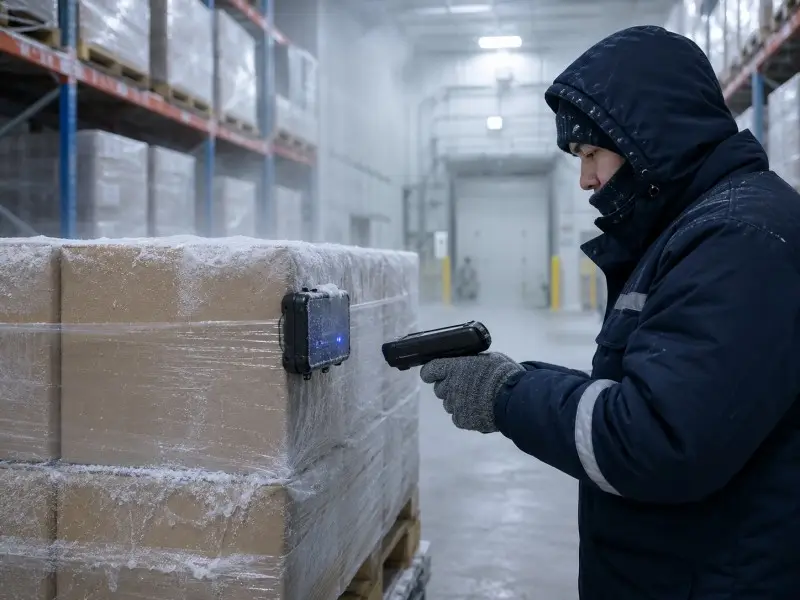
Electronic labels, wireless scanners, data terminals, portable printers, and mobile inspection equipment may operate inside refrigerated warehouses.
These devices often move repeatedly between normal and cold areas. Temperature cycling can create condensation, which means the product enclosure and connector design deserve as much attention as the cell.
A suitable battery system may combine low-temperature cells with insulation, moisture protection, controlled airflow, and temperature sensing.
If the equipment has enough space and power, a heating element may also be considered. However, heating consumes energy, so the battery capacity and control strategy must be calculated around the complete operating cycle.
Charging Requires Special Attention
Discharging and charging are not the same process. A battery may be capable of supplying power at a low temperature while still requiring warmer conditions for safe charging.
Charging a lithium battery outside its specified temperature range can create safety risks and reduce battery life. A well-designed pack may use a thermistor or BMS temperature sensor to limit or block charging when the battery is too cold.
For automatically charged equipment, the charger, BMS, heating system, and device controller should work together. The product should not depend on the user remembering to check the battery temperature manually.
Customizing a Low Temperature Battery Pack
A low temperature battery should be developed around the application rather than selected from a generic capacity list.
The battery manufacturer normally needs to know:
- Required voltage and capacity
- Minimum operating temperature
- Continuous and peak current
- Expected runtime
- Charging temperature
- Battery compartment dimensions
- Exigences en connecteurs et câbles
- Protection and communication functions
- Exposure time and environmental conditions
Testing should reproduce the actual device load as closely as possible. A small laboratory discharge current may not reveal the same voltage behavior seen when a motor or communication module starts.
Conclusion
Low temperature lithium polymer batteries are used wherever compact electronic equipment must continue operating in cold conditions. Common applications include outdoor sensors, cold-chain trackers, drones, portable medical equipment, handheld instruments, and refrigerated warehouse devices.
The right solution depends on more than the cell’s stated temperature range. Battery chemistry, current demand, charging control, BMS settings, insulation, enclosure design, and realistic low-temperature testing must all be considered together.
Questions fréquemment posées
What is a low temperature lithium polymer battery?
It is a lithium polymer battery designed to provide more reliable capacity and voltage performance in cold environments than a conventional battery.
Can a low temperature battery be charged below freezing?
Discharge and charging limits may differ. Charging should only take place within the temperature range specified by the battery manufacturer and controlled by a suitable BMS.
Does cold weather permanently damage a lithium polymer battery?
Temporary capacity and voltage loss may recover after the battery returns to a normal temperature. However, improper charging or repeated use outside the specified range can cause permanent damage.
Which devices commonly use low temperature lithium polymer batteries?
Typical applications include GPS trackers, outdoor sensors, drones, handheld instruments, cold-chain devices, and portable emergency equipment.
Can the battery shape and connector be customized?
Yes. Voltage, capacity, dimensions, cable length, connector, protection circuit, thermistor, enclosure, labeling, and packaging can usually be customized for OEM projects.
Parlez au fabricant
Ressources et Perspectives
Meilleure batterie LiPo pour appareils IoT : comment choisir la bonne solution d’alimentation
2026-07-28
Pack batterie lithium-ion personnalisé 51,8V 30Ah 21700 pour systèmes d’alimentation robotiques humanoïdes commerciaux avec BMS intégré pour un fonctionnement sûr et fiable
2026-07-28
Module batterie LiFePO4 personnalisé 38,4V 30Ah pour robots avec port de recharge sans fil
2026-07-28
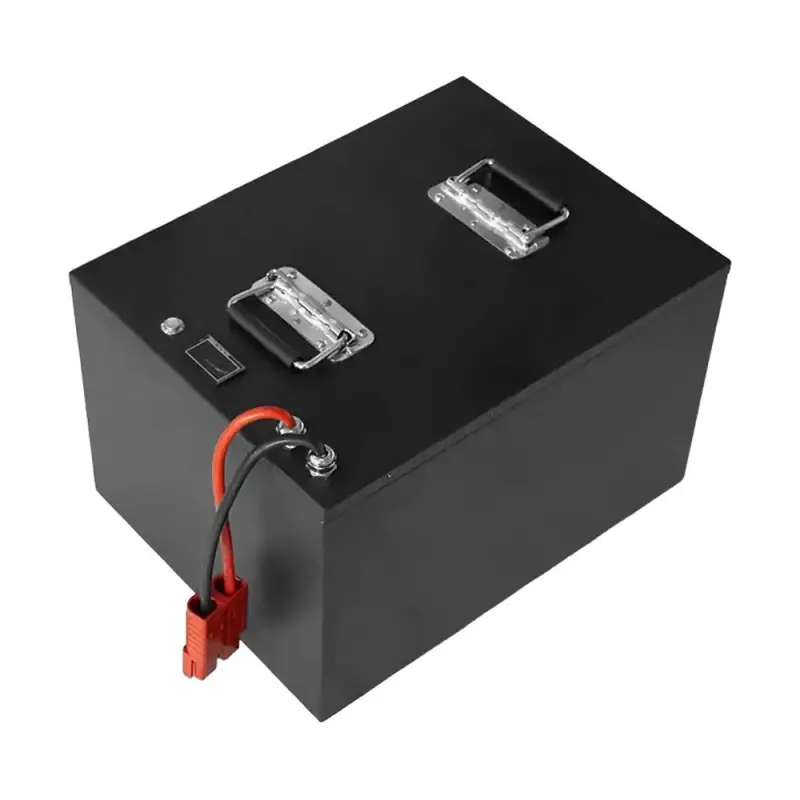
24V 36V 48V 52V 60V 72V 40Ah 50Ah LiFePO4 batterie rechargeable pour camping-cars, AGV, voiturettes de golf et systèmes de stockage d’énergie
2026-07-28


